Sometimes the connections are the most interesting part. Sadly, it’s often difficult to connect information well. There are just so many possible candidate knowledge pieces to choose from, and what features do we use to match these pieces of knowledge?
We too often how tricky it is for students to connect unfamiliar knowledge. Dan Willingham argues that this is why students make ‘more shallow connections [but they] … think they’ve got it … they don’t realise there is a deeper level of meaning’
How to Teach the links?
Willingham argues that ‘… the answer of course is to be as explicit as possible about the connections you’r expecting students to make.’ He cites evidence that explicitly teaching with schema construction and signaling in mind can improve learning.
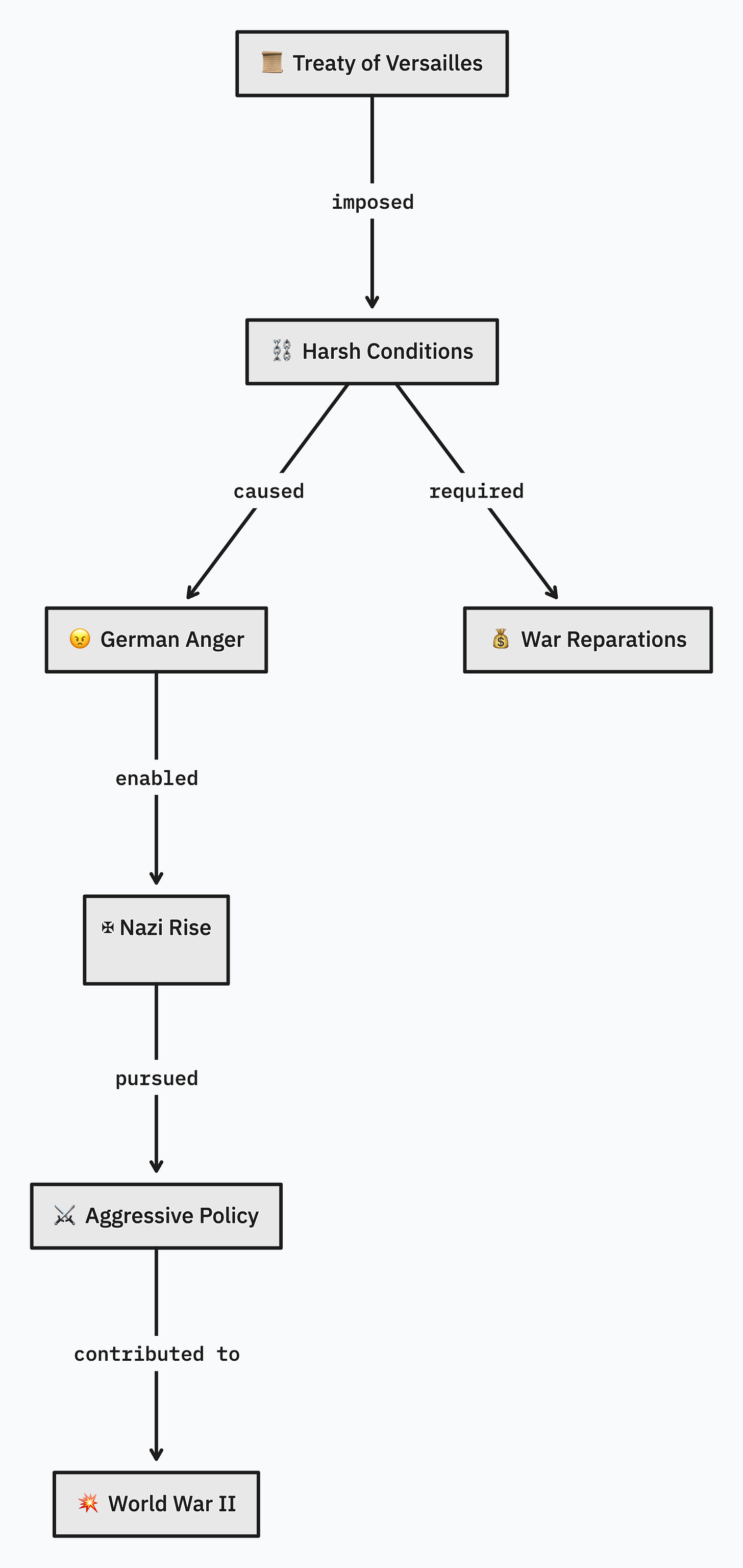
One way to explicitly teach connections is to visualise them. For example, here I can lay out visually how the Treaty of Versailles was a contributing factor to World War Two (create your own here).
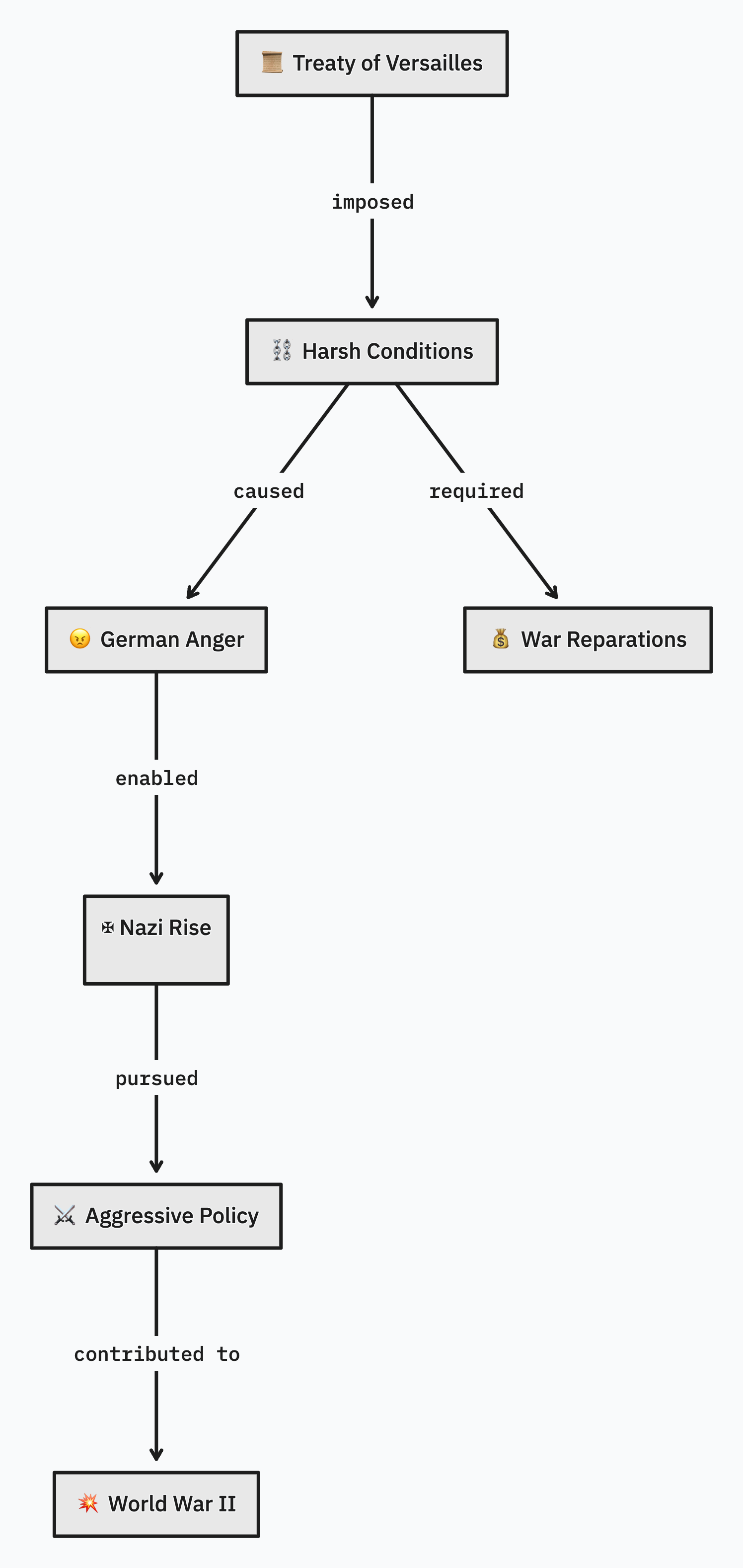
(This is an example of one of the 6 historical thinking concepts, causation).
Secondly, we can assess students’ ability to link together topic that they have already learning using hexagons. As Karl McGrath has noted in his blog on the topic, this is a way of assessing students’ ability to connect the knowledge they have learned. Critically, we can use this activity to understand the mental models the students have attained from our teaching of the topic.
Why should we teach links?
Explicit teaching of connections between knoweldge helps students develop what Sarah Cottinghatt calls 'situation-sensitive mental models' - internal frameworks that help them recognise not just that connections exist, but which connections matter most in different situations.
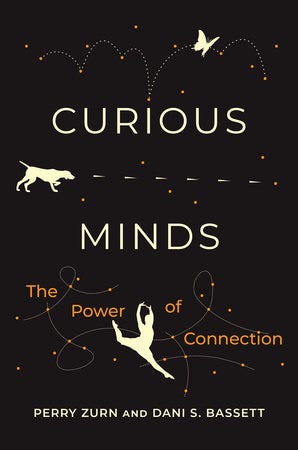
The prize is large. Research from the neuroscientists Danny Bassett and Perry Zurn suggests that curiosity comes more from links between knowledge than from the knowledge itself. As they put it, ‘curiosity work is edgework’.1 They also argue there are different types of knowledge linkers: busy-bodies who assemble as much information on a topic as they can, hunters who are focused on a particular question and dancers who move through the knowledge space more randomly. Should we sequence our curriculum, lessons and activities so that students use these different modes of linking knowledge?
Let me know if you have any comments, suggestions or critiques! I would particularly be interested in views on whether:
a) Should we be thinking more about the importance of linking knowledge?
b) Is it useful to consider the different types of linking identified by Zurn and Basset (busy, hunting and dancing)?
(See this podcast for a discussion of their work). This conceptual move opens up an interesting question about what ‘shape’ our domains might be and how might we, as teachers, guide students through this space. Kurt Vonnegut once argued that stories have shapes, perhaps subjects do to.